
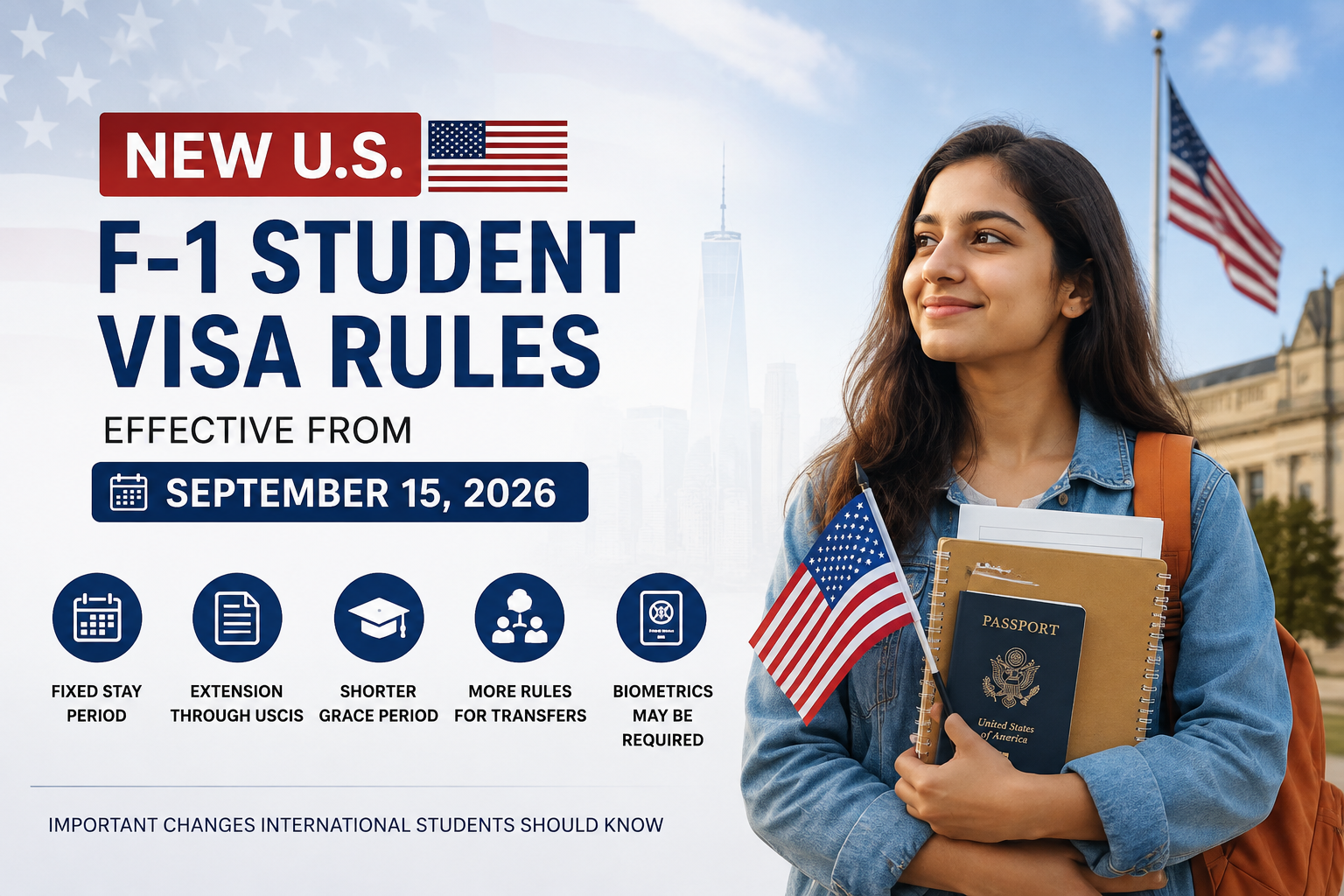
Planning to study in the United States? If yes, it’s important to stay informed about the latest immigration updates that could impact your education journey. The U.S. Department of Homeland Security (DHS) has announced significant changes to the F-1 student visa regulations, with the new rules scheduled to take effect from 15 September 2026. These updates are designed to strengthen immigration compliance while providing a more structured framework for international students.
For Indian students aspiring to pursue higher education in the USA, understanding these changes is essential for proper planning and maintaining lawful student status throughout their academic journey.
Why Are These Changes Important?
The United States remains one of the most preferred destinations for international education due to its world-class universities, research opportunities, and global career prospects. However, studying abroad also requires strict compliance with immigration regulations.
The latest DHS reforms introduce several procedural changes affecting how students maintain their F-1 status, extend their stay, transfer institutions, and manage their academic programs. Students who understand these updates in advance will be better prepared to avoid unnecessary complications during their studies.
1. Fixed Stay Period Instead of “Duration of Status”
One of the most notable changes is the replacement of the traditional “Duration of Status (D/S)” system.
Previously, international students could remain in the United States as long as they maintained their F-1 status and continued their academic program.
Under the proposed rules, students will instead receive a fixed period of authorized stay that will be recorded on their I-94 arrival record. Once this authorized period expires, students must take appropriate action if they need additional time to complete their studies.
2. Extension of Stay Will Require USCIS Approval
Currently, if students need additional time to finish their degree program, they usually work with their university’s Designated School Official (DSO) to extend their academic program.
Under the new regulations, students may be required to submit an official Extension of Stay application directly to U.S. Citizenship and Immigration Services (USCIS).
This additional step makes advance planning more important than ever. Missing application deadlines could affect legal immigration status.
3. Shorter Grace Period After Graduation
The grace period allows students to remain in the United States after completing their studies before departing or changing their visa status.
The new regulations reduce this period from 60 days to 30 days.
This means graduates must act more quickly when:
- Applying for Optional Practical Training (OPT)
- Changing visa categories
- Beginning another academic program
- Leaving the United States
Students should prepare their post-graduation plans well before completing their degree.
4. University Transfers May Become More Structured
Many international students transfer between colleges or universities for academic, financial, or personal reasons.
The new DHS framework introduces stricter transfer procedures, meaning students may face additional documentation requirements or tighter timelines when changing institutions.
Before planning a transfer, students should consult both their current university and the receiving institution to ensure full compliance with immigration requirements.
5. Greater Restrictions on Program Changes
Changing majors, academic levels, or educational programs has traditionally offered considerable flexibility for international students.
According to the new guidelines, these changes may become more regulated, requiring additional approvals or documentation.
Students should carefully evaluate their academic choices before beginning their studies to minimize future complications.
6. English Language Programs Limited to 24 Months
Students enrolling in English language training programs should pay particular attention to this update.
The proposed regulations introduce a maximum study period of 24 months for English language education.
Students intending to improve English proficiency before beginning a degree program should plan their educational pathway carefully to avoid exceeding the permitted duration.
7. Biometrics May Be Required for Some Applications
Another important procedural change involves biometrics.
Previously, most extension requests did not require biometric appointments. Under the new framework, certain extension applications may require fingerprinting and biometric verification.
Applicants should therefore expect additional processing steps when applying for immigration benefits.
How These Changes Affect Indian Students
Indian students represent one of the largest international student communities in the United States. While these updates do not reduce educational opportunities, they do place greater emphasis on planning, documentation, and compliance.
Students should:
- Maintain valid immigration records.
- Track important visa and academic deadlines.
- Stay in regular contact with their university’s international student office.
- Apply for extensions well before expiration dates.
- Keep all academic and immigration documents updated.
Proper preparation can help students avoid unnecessary delays or immigration issues during their education.
Role of Education Consultants
As immigration regulations become more structured, experienced education consultants can play an important role in guiding students through the admission and visa process.
Professional counselling helps students understand university requirements, application timelines, visa documentation, and the latest immigration updates before making important academic decisions.
Working with knowledgeable advisors can reduce confusion and improve overall preparedness for studying abroad.
Final Thoughts
The upcoming F-1 visa regulations represent one of the more significant updates to U.S. student immigration procedures in recent years. Although the changes introduce additional responsibilities for international students, they also encourage better planning and compliance throughout the study journey.
Students planning to study in the USA for upcoming intakes should remain informed, prepare documentation early, and follow official guidance issued by their university and U.S. immigration authorities. Staying proactive will help ensure a smooth educational experience while avoiding unnecessary legal or administrative complications.
If you are planning to pursue higher education in the United States and need guidance on university admissions, application procedures, or the latest visa updates, consult experienced study abroad professionals who can help you make informed decisions at every stage of your journey.